There is a girl in Year 10 somewhere in England who speaks two languages fluently.
At home she speaks Romanian — to her mother, to her grandmother on the phone, in the language she dreams in. At school she speaks English, well enough that most of her teachers have forgotten she arrived speaking none of it.
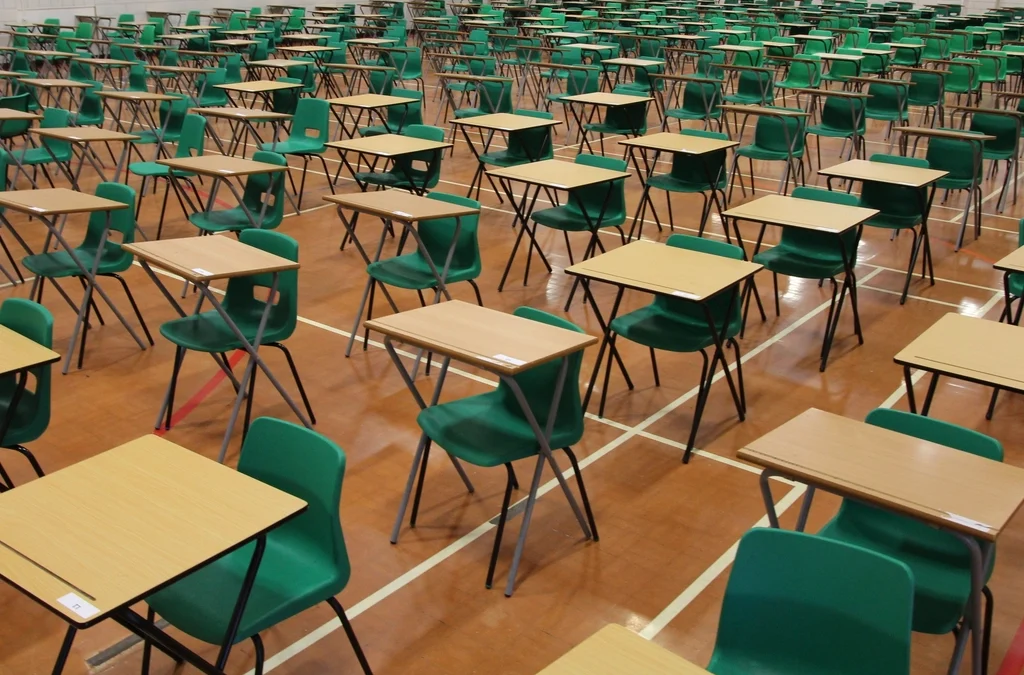
Next summer she will sit her GCSEs. She will get a grade for English. She will get a grade for maths, for science, for whatever else she has chosen. And for the language she has spoken every day of her life, she will get nothing — because there is no exam for it.
Not because she isn’t good enough. Because it does not exist.
The languages a British child can take at GCSE
Here is what is actually on offer from the exam boards right now:
ItalianPolishPanjabi
BengaliUrduChinese
Modern HebrewArabicGreek
JapanesePersianPortuguese
RussianTurkishGujarati
Biblical Hebrew
Nineteen languages. A child who speaks Polish at home can walk into an exam hall and turn that into a GCSE. So can a child who speaks Panjabi, or Urdu, or Portuguese, or Turkish, or Persian.
And this is not a small community
Those are the 2021 Census figures, not ours. Romania is the fourth most common non-UK country of birth in England and Wales. The number of Romanian-born residents grew from 80,000 to 539,000 in ten years — the largest increase of any country in the census. And Romanian was the fastest-growing main language in the country: from 68,000 speakers to 472,000.
Several of the languages on that list above have far fewer speakers here than Romanian does.
So whose decision is this?
This is the part most parents assume is a rule, a policy, something written down in law. It is not.
In 2022, more than eleven thousand people signed a petition asking for a Romanian GCSE. The Department for Education replied — and their answer is worth reading slowly:
“At present, there is no GCSE in Romanian.”
They went further. They said there is no reason in principle why one could not be introduced — and that the decision does not belong to the government at all. It belongs to the exam boards, who decide which languages they believe there is enough demand to be worth awarding.
Which means this is not a locked door. It is a door nobody has pushed hard enough.
What it costs a child
It is easy to hear “there’s no Romanian GCSE” and think: so what, she can take French instead.
But think about what that sentence actually does to a fifteen-year-old. It says: the language your grandmother sings in is not a subject. It is not worth a grade. It is a thing you do at home, quietly, and it will not count for anything on the piece of paper that decides where you go next.
Meanwhile the boy at the next desk gets a grade 9 for the Polish he learned in exactly the same way — at his kitchen table, from his mother.
A GCSE is not just a certificate. It is a school telling a child that what they know has value. Romanian children in this country are being told, quietly and without malice, that theirs does not.
What we have done about it
We did the only thing we could think of doing, which was to stop waiting.
We built the course. A full Romanian course at GCSE standard — Foundation and Higher, 29 lessons, native Romanian audio, exam-style practice, built to the same structure as the language GCSEs that already exist. It is free.
Not because we can award anyone a qualification. We cannot, and we will not pretend otherwise. There is no Romanian GCSE to sit, and nobody should tell you there is.
We built it because the most common reason given for not creating a qualification is that there is no demand and no material. So here is the material. And every person who joins the waiting list is the demand, counted, in a form an exam board cannot wave away.
What you can do, today
If you are a Romanian parent in Britain: join the waiting list. It takes a minute, it costs nothing, and it turns your family from an anecdote into a number.
If you are a teacher, a head of MFL, a governor: back the campaign. A letter from a school carries a weight that a hundred parents cannot.
And if you are neither — if you simply think a child who speaks two languages should be allowed to prove it — then share this with someone who can act on it.